

Curatorial Statement
The crux of this exhibition begins with a set of questions: Who were these workers? What can we glean from their individual stories beyond the professional titles of porter or maid in the personnel files preserved in the archives?
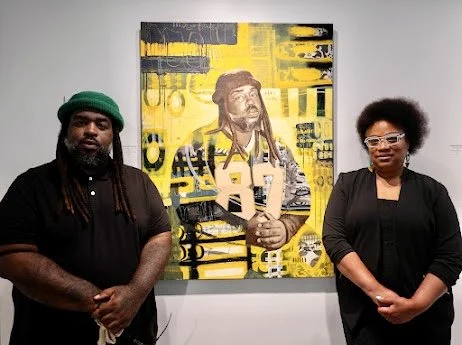
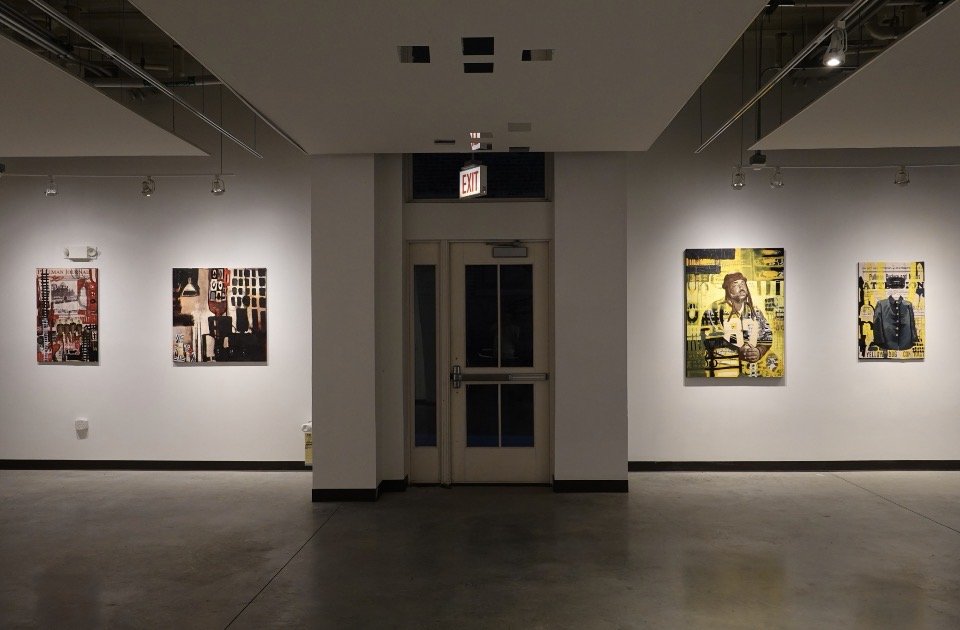
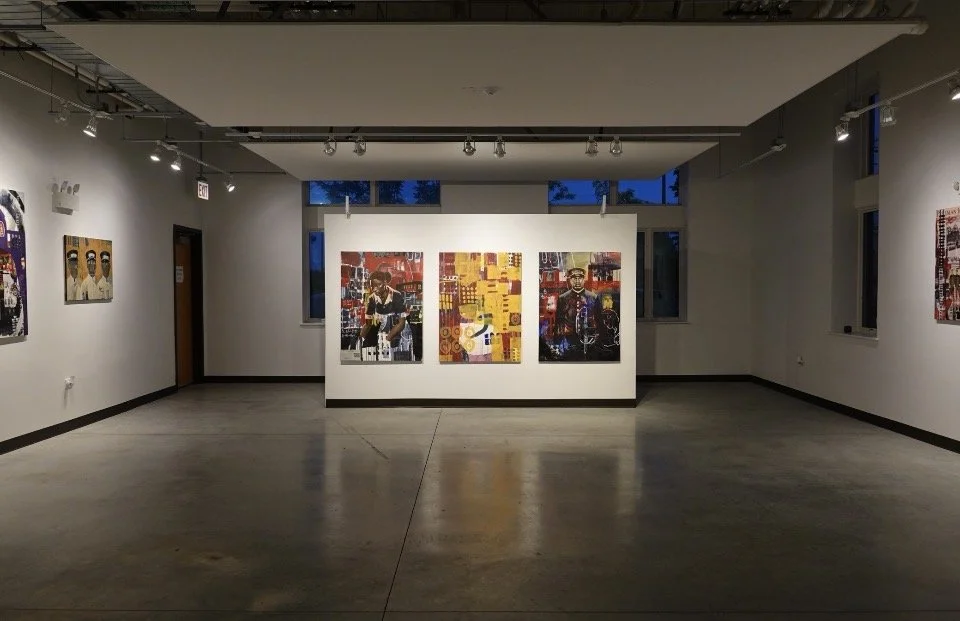
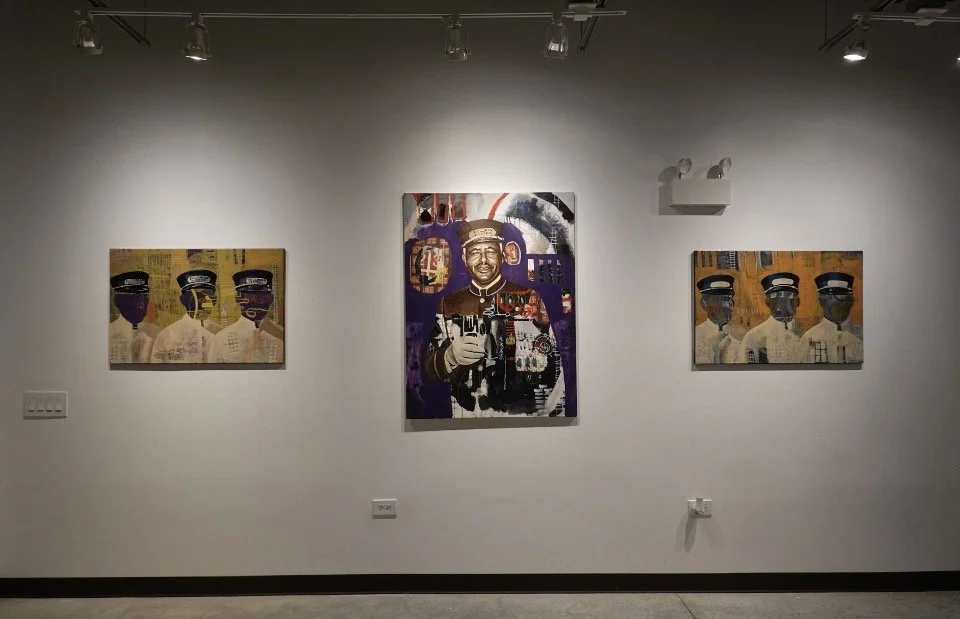
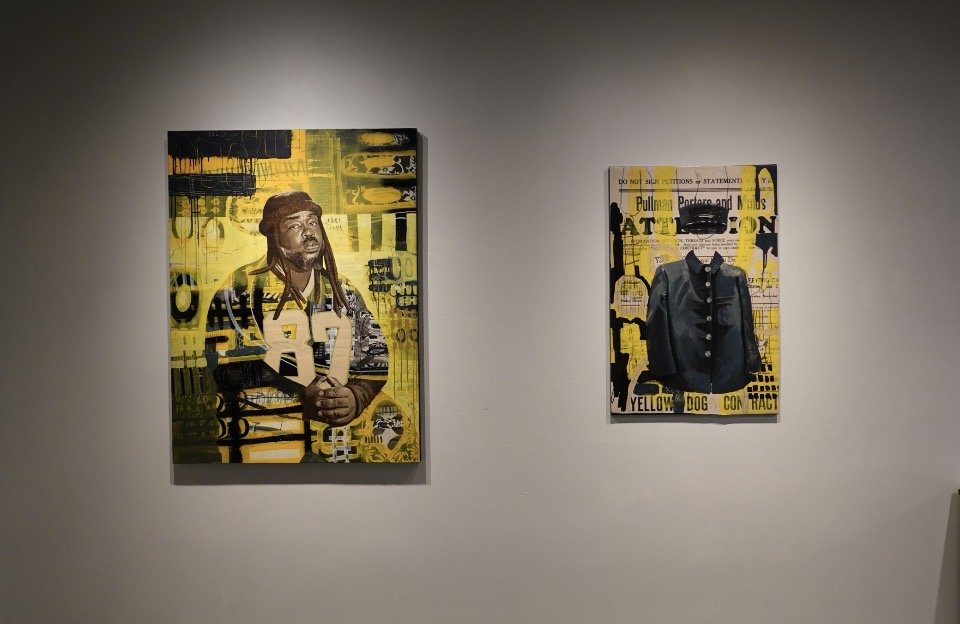
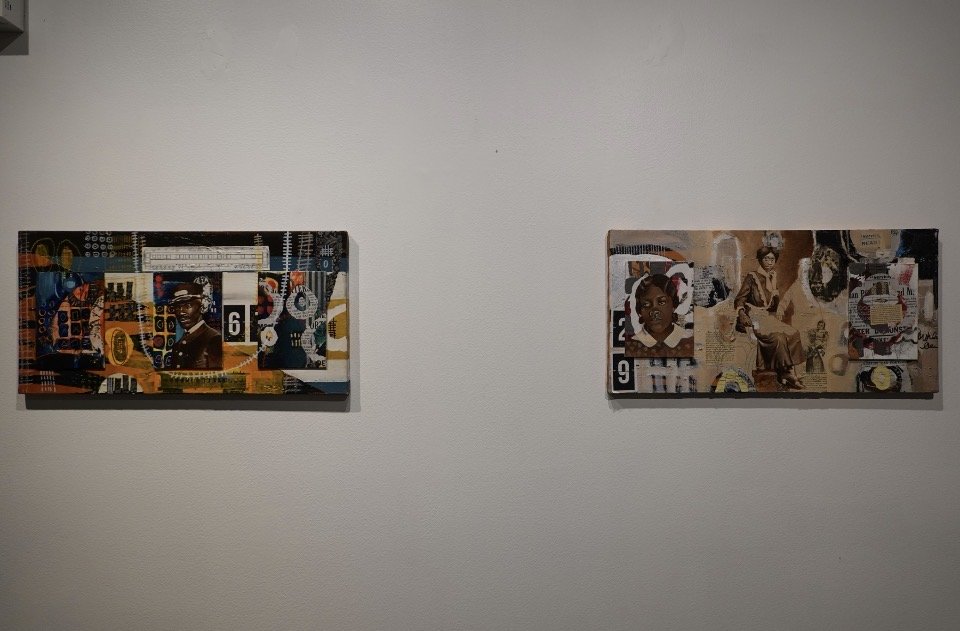
A visual response takes form in Pullman Porters & Maids: Invisible Labor, Visible Legacies. Curated by Juelle Daley, the exhibition presents a new body of work by artist Shane-Jahi Jackson, developed through his research residency at the Newberry Library in Chicago and informed by the archives of the Pullman Company. In these paintings, some figures’ facial features are clearly rendered, while others remain partially obscured or absent, appearing at times like ghostly apparitions.
Jackson acts as a conjurer of old spirits, using archival materials as scaffolding to recover stories otherwise left fragmented by the historical record. Diagrams and technical layouts of Pullman cars, newspaper clippings, advertising imagery, and fragments of non-identifiable information from personnel files appear as collage elements throughout the work. In doing so, the Pullman Company becomes embedded in the abstract language of the paintings, from which Black figures emerge proud, dignified, and powerful. The artist’s abstract language in the pieces embodies the emotion and mood of the subject’s life and times working for the Pullman Company.
The importance of this exhibition lies not only in recovering a history of Black labor too often relegated to the margins, but also in recognizing the human lives and legacies carried within that labor. Pullman Porters and Maids were integral to Pullman branding of “luxury” such that black bodies would serve and ensure comfort as a carry-over from slave times although this time as a paid laborer. Black presence in the act of servitude sought to anchor Black presence primarily as mules and not as people with family or community but to retain a grin or wear a mask to put white patrons at ease.
Jackson’s work pushes back against that erasure by restoring presence, feeling, and individuality to those whom the archive too often preserves only as records. He plays with the tension between presence and absence in an effort to reclaim the humanity of these workers and to insist upon their complexity.
The exhibition ultimately invites viewers to imagine what the archive cannot fully hold: a voice, a memory, a personality, a life. These paintings respond with an imagined declaration from one of its archival subjects: “My name is Mary, and I work for the Pullman Company.”